Your Baby's First Birthday Is Now a Brand Activation and You're the Unpaid Influencer
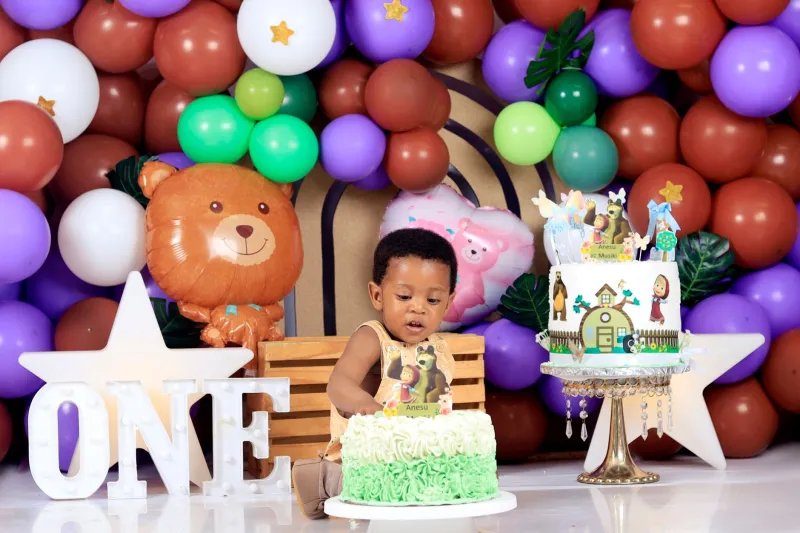
Let's set the scene. Your child is turning one. They have been alive for twelve months. Their current passions include a crinkle toy, the dog's water bowl, and aggressively gumming a board book about farm animals. They will not remember this day. Their hippocampus is not yet built for long-term episodic memory. This is a medical fact.
And yet: you have rented a venue. You have hired a balloon artist. You have commissioned a custom acrylic sign that reads "Wild One" in a font that costs $18 per license. You have booked a professional photographer specifically for the fifteen-minute window where your child sits in front of a layered fondant cake they are allowed to destroy with their hands, which is called a "smash cake session" and which runs, on average, about $250 to $400 depending on your zip code and your photographer's Instagram following.
Congratulations. You have not thrown a birthday party. You have launched a brand.
How We Got Here: The Algorithmic Childhood
It didn't happen overnight, and it didn't happen because parents suddenly became worse people. It happened because social media created a new audience for childhood milestones, and once there's an audience, there's a market, and once there's a market, there are vendors, and once there are vendors there are trends, and once there are trends there is the creeping, nauseating sensation that whatever you're doing is not quite enough.
Pinterest was arguably the original sin. Then came Instagram's visual arms race. Then TikTok's "party reveal" format, where a parent walks the camera through their elaborate setup to an upbeat audio track, racking up hundreds of thousands of views. The message encoded in every one of those videos is the same: this is the floor, not the ceiling. Your balloon arch is table stakes now. What else have you got?
The influencer-industrial complex accelerated everything. Mommy influencers and family content creators don't just document parties — they set market expectations for them. When someone with 800,000 followers posts a "simple backyard birthday" that features a custom floral installation, a branded cookie tower, and a caricature artist, the word "simple" quietly gets redefined for everyone watching. The Overton Window of acceptable birthday expenditure shifts, and it only ever shifts in one direction.
The Vendor Ecosystem That Ate the Backyard BBQ
Where there is demand, there is an entire micro-economy waiting to service it. The modern first birthday party now has its own supply chain.
There's the theme selection — no longer just "circus" or "princess," but hyper-specific aesthetics: Boho Rainbow Neutral Tone, Groovy Retro Daisy, Little Lemon Sunshine, Safari But Make It Muted. Each theme has its own corresponding Etsy shop ecosystem, its own balloon configuration, its own tablecloth palette, its own curated snack tower arrangement. Choosing a theme is now less like picking a party vibe and more like selecting a product line.
Then there's the vendor stack. Balloon stylist. Cake designer (separate from the smash cake vendor, obviously). Backdrop rental company. Custom stationery for invitations that will be photographed once and recycled. A specialty "grazing table" caterer because charcuterie became aspirational somewhere around 2019 and never left. A photo booth rental with custom branded props. And, of course, the photographer, who shoots not just the cake smash but the setup, the details, the parents, the guests, the child interacting with guests, the child ignoring guests to eat a balloon ribbon.
A 2023 survey from the party planning platform Zola found that American parents spend an average of $1,000 on a first birthday party. That's the average. The ceiling is wherever your credit limit is.
The Competitive Consumption Nobody Admits Is Competitive
Here's the thing about the parenthood upgrade cycle: everyone doing it insists they're doing it for the child. "I just want it to be special." "They only turn one once." "I love creating memories." These are true feelings, genuinely held. They're also the same feelings that have been successfully monetized by an industry that depends on you believing that love is best expressed through themed décor and documentation.
The child, to reiterate, will remember none of this. The memories being created are for the parents, for the grandparents, for the Instagram grid, for the family photo album, for the reel. The beneficiary of the smash cake session is not the baby covered in frosting — it's the content library being built around the baby covered in frosting.
This is not a moral indictment. Parents are not bad for wanting to celebrate their kids. But it's worth naming what's actually happening: these parties have become performance events, and the audience is not the one-year-old. The audience is everyone watching online. The pressure is social, the medium is algorithmic, and the bill is very, very real.
The Comparison Engine Never Sleeps
What makes the parenthood upgrade cycle so durable is that the comparison engine never powers down. You're not just competing with your neighbor — you're competing with a curated global feed of the most elaborate, most photogenic, most over-the-top children's parties that have ever existed, served to you in an infinite scroll at 11 p.m. while you're already a little anxious about whether you've done enough.
Sponsored posts from party supply companies sit seamlessly between organic content. Targeted ads for custom cake toppers appear the week before your child's birthday because your phone heard you mention it, or your search history betrayed you, or the algorithm just knows. The line between inspiration and advertisement dissolved years ago, and the party industry is extremely comfortable in that ambiguity.
The result is a celebration culture that has fully decoupled from its original purpose. A first birthday party used to be a small gathering of people who love a child, eating cake, watching said child experience cake for the first time. It was a human moment. Now it's a content moment with human elements arranged tastefully in the frame.
What Would Enough Actually Look Like?
This is not a call to deprive your kid of a birthday party. Cake is good. Balloons are fun. Gathering the people who love your child and making a fuss over them is genuinely lovely and worth doing.
But maybe the question worth sitting with — before you open the Etsy tab, before you book the smash cake photographer, before you select your theme from a dropdown menu — is who this party is actually for. If the honest answer is "partly for me, partly for the content, partly because I don't want to feel like I'm falling short of something I've seen online," that's not shameful. That's just the water we're all swimming in.
The parenthood upgrade cycle is not going to stop. The vendors are not going to stop. The algorithm is not going to stop rewarding the most elaborate version of everything. But you can, quietly and without announcing it on social media, throw a party that fits in your backyard and your budget. Your kid will eat the cake either way. They will be equally delighted. They will remember none of it.
The crinkle toy will probably still be their favorite thing in the room.