Your Sofa Has a Six-Month Shelf Life Now and the Planet Is Not Okay With That
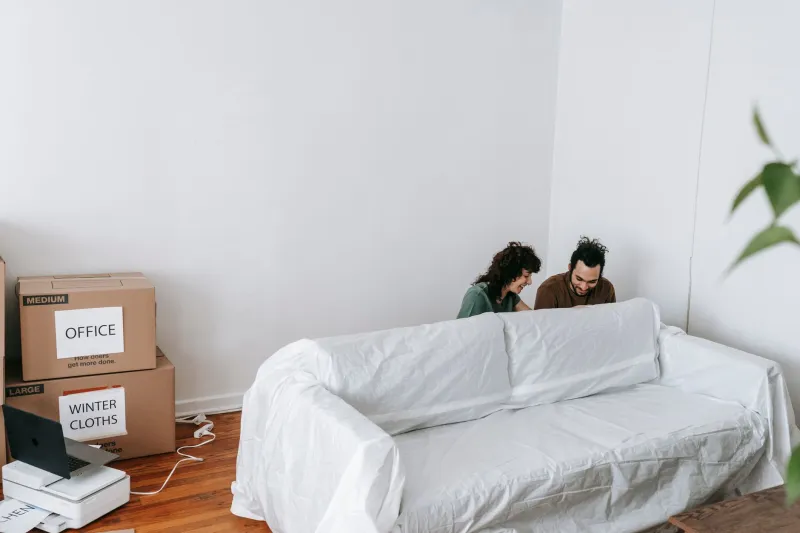
Somewhere between your third scroll through a curated apartment account and your fourteenth minute inside an IKEA showroom designed to make you feel like your actual home is a crime scene, something shifted. Your couch — the one you bought two years ago, the one that is structurally fine, the one that has done nothing wrong — started to feel like a problem that needed solving.
This is not an accident. This is a business model.
Welcome to fast furniture: the logical, catastrophic extension of fast fashion into the one area of your life that was supposed to be stable. Your living room is now a mood board in progress. Your bank account is the landfill. And somewhere in a New Jersey warehouse, a modular sectional in a color called "Oat Dream" is waiting to replace the sectional in "Warm Stone" that you bought eighteen months ago and have already decided feels very 2023.
The Aesthetic Industrial Complex Came for Your Square Footage
Instagram didn't invent the desire for a beautiful home. But it did invent the sensation that your current home is perpetually one refresh away from being embarrassingly behind. Pinterest boards became mood boards became shopping lists. TikTok's interior design corner — affectionately known as #RoomTok — cycles through aesthetics the way a toddler cycles through obsessions: Cottagecore, then Dark Academia, then Japandi minimalism, then something called "Coastal Grandmother" that lasted approximately eleven weeks before being replaced by "Quiet Luxury," which itself is now being quietly replaced by something involving a lot of raw linen and terracotta that doesn't have a name yet but will by Thursday.
Each aesthetic shift carries with it an implicit product requirement. You cannot achieve Japandi minimalism with a tufted velvet sectional. You cannot pull off Coastal Grandmother with an all-black media console. The aesthetic is the brief, and the brief demands new furniture, and new furniture — at the price points most Americans are actually shopping — means furniture engineered to be temporary even when it's marketed as timeless.
Particle Board Is Not a Long-Term Relationship
Let's talk about the physical reality of what we're buying. The fast furniture economy runs on engineered wood products: MDF, particle board, hollow-core construction held together by cam locks and the ambient optimism of assembly day. These are not heirlooms. They are not meant to be. A $299 dresser from a direct-to-consumer brand with a soothing Scandinavian-adjacent name is not going to outlive your lease, and everyone involved in the transaction knows this.
The average American now moves every five years. Fast furniture companies have essentially done the math on this and concluded that furniture should be priced and constructed to survive approximately one relocation before it becomes structurally ambiguous. This is not cynicism. This is a product roadmap.
The genius — if we're being generous, and we're not — is that the low price point doesn't feel like a warning. It feels like a deal. You're not buying a couch that will fall apart in four years; you're buying a couch for an extremely reasonable amount of money that you can upgrade when you're ready. The planned obsolescence is reframed as flexibility. The disposability is reframed as freedom.
The Rental Class and the Furniture Churn
There's a structural reason this moment exists, and it's not entirely about aesthetics. The American rental rate is at a generational high. Homeownership, particularly for adults under 40, has become increasingly theoretical — something that happens to other people in less expensive zip codes. When you're renting, your relationship to your space is fundamentally provisional. You're not nesting; you're staging a temporary occupation.
This psychological impermanence has real consumer consequences. Why invest in a $2,000 sofa when you don't know if you'll be in this apartment in two years? Why buy a dining table built to last decades when your landlord could sell the building to a developer and give you sixty days? The rational response to housing instability is furniture instability, and the furniture industry has been absolutely delighted to meet that demand at a $399 price point with free shipping.
The result is a churn cycle that benefits everyone except the consumer and the environment. You buy cheap. It degrades. You replace it with something slightly different because the aesthetic has shifted anyway. The old piece goes to the curb, to Facebook Marketplace where it will sit unloved for three weeks, or directly to a landfill that is now, fun fact, receiving approximately twelve million tons of furniture per year in the United States alone. Twelve million tons. That's a lot of Oat Dream sectionals meeting their maker.
The Subscription Furniture Moment Nobody Asked For
If you thought the furniture industry would stop at fast, you underestimated the furniture industry. The logical endpoint of treating furniture as a temporary experience rather than a durable good is — obviously — furniture subscriptions. Several startups have entered this space with the pitch that you can rent a fully furnished apartment aesthetic, swap pieces when you get bored, and return everything when you move. It's Rent the Runway for your living room. It is, as a concept, both extremely convenient and deeply unsettling.
The subscription furniture model essentially confirms what the fast furniture economy has been implying all along: you shouldn't own things. You should access things. Ownership implies permanence, and permanence is uncomfortable in a world where your aesthetic preferences, your zip code, and your financial situation are all subject to change without notice. Better to stay liquid. Better to stay light. Better to never be too attached to any particular sofa, because the algorithm will show you a better one by Thursday.
More Couch, More Problems
Here is the thing about the dopamine furniture cycle that nobody in the business is particularly eager to discuss: it doesn't actually make your home feel better for very long. The new couch hits. The new rug transforms the room. The new media console in a walnut-adjacent finish makes the whole space feel intentional and curated and adult. And then, approximately three weeks later, the algorithm shows you something slightly different, and the room starts to feel like a problem again.
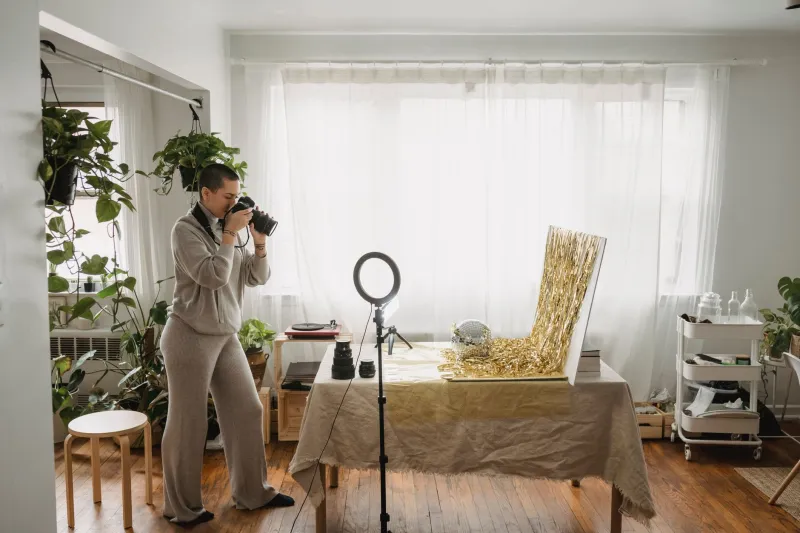
This is not a design failure. This is the system working correctly. The dissatisfaction is the product. The gap between what your space looks like and what it could look like — as rendered in a perfectly lit flat lay by someone with a ring light and a PR contact at a furniture startup — is the engine of the whole enterprise. Close the gap, and a new gap opens. Buy the couch, and the rug becomes the issue. Fix the rug, and suddenly the lighting is wrong.
Your living room is not a problem to be solved. But it is an extremely reliable source of recurring revenue for companies that need you to believe otherwise.
The couch is fine. The couch was always fine. The couch will be replaced within eighteen months regardless, and somewhere in a warehouse, Oat Dream is waiting.