Congratulations, You Now Need a Lab Coat to Buy Moisturizer
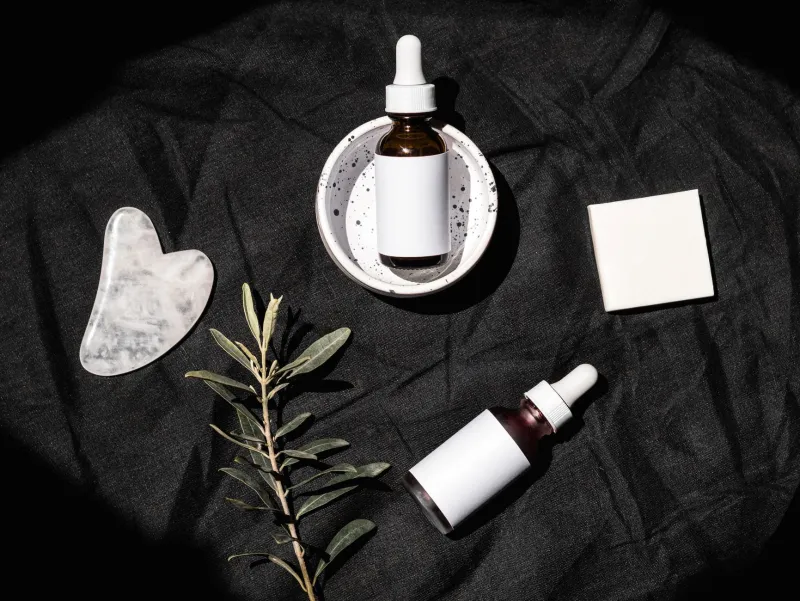
Somewhere between the third TikTok video explaining why your current retinol is 'basically doing nothing' and the fourth tab you've opened trying to understand the difference between L-ascorbic acid and ascorbyl glucoside, something has gone very wrong. You came here to wash your face. You are now enrolled in an unaccredited dermatology program with a $600 textbook budget and no graduation date in sight.
Welcome to modern skincare, where the complexity is the product.
The Ingredient Arms Race Nobody Asked to Join
There was a time — not that long ago — when a 'skincare routine' meant a bar of Dove soap and a jar of Pond's Cold Cream that your grandmother kept on her vanity until she died, still looking fine. That era is gone. Buried under seventeen layers of actives, each one promising to reverse the specific kind of cellular damage that the previous product apparently caused.
Today's beauty consumer is expected to fluently parse terms like 'encapsulated retinaldehyde,' 'tranexamic acid,' 'polyglutamic acid,' and 'bakuchiol' — and not just know what they are, but understand how they interact with each other at the molecular level. Because if you layer your vitamin C over your niacinamide in the wrong sequence, you will, according to at least forty Reddit threads, essentially be pouring battery acid on your face. Or maybe those two are fine together now? The science changed. It changes every three months. Keep up.
The ingredient list on a prestige serum now reads like a graduate thesis abstract. Brands have leaned so hard into the lab aesthetic that products arrive in packaging that looks like it was sourced from a Pfizer supply chain — clinical fonts, sterile white boxes, little numbered pipettes. The message is clear: this is medicine. You are a patient. Please pay accordingly.
Complexity as a Pricing Strategy
Here is what the beauty industry figured out, probably in a very expensive conference room around 2015: confusion is profitable. When a consumer doesn't fully understand what a product does, they can't confidently decide they don't need it. And when you introduce enough scientific terminology — real terminology, borrowed from actual dermatology research — the price stops feeling arbitrary and starts feeling earned.
A $12 drugstore moisturizer hydrates your face. A $95 'bioactive barrier-restoration emulsion with ceramide NP complex and adaptive moisture-sensing technology' also hydrates your face, but you're not entirely sure it isn't doing something more important that you'd be foolish to skip. That uncertainty is not an accident. That uncertainty is the product.
The escalation has been genuinely breathtaking. Serums that cost more per ounce than gold. Eye creams with price tags that require a moment of silent reflection before checkout. Sunscreens — sunscreens, a product whose entire job is to sit between your skin and a star — that now retail for $68 because they contain 'bio-fermented kelp extract' and were developed 'in collaboration with Korean dermatologists,' a phrase that currently functions as a luxury signal roughly equivalent to 'hand-stitched in Italy.'
The Anxiety Is Load-Bearing
None of this machinery runs without fuel, and the fuel is fear. Specifically, the fear that your face is quietly catastrophizing at the cellular level and that you are one missed application away from looking five years older by Thursday.
Anxiety marketing in skincare is so normalized that we've stopped noticing it. Phrases like 'fight the signs of aging,' 'defend against environmental aggressors,' and 'repair overnight damage' have been in the copy for so long they sound like facts. But unpack them for a second: aging is framed as a battle you are losing. The air outside is an aggressor. You are damaged. The only reasonable response is to purchase something immediately.
The content ecosystem around skincare has turbocharged this dynamic in ways the industry could never have manufactured on its own. Dermatologists on Instagram post comparison photos. Beauty influencers release twelve-minute videos explaining why your cleanser is 'stripping your moisture barrier,' a phrase that did not exist in mainstream consumer vocabulary eight years ago and now lives in the heads of millions of people who check their skin in ring-light mirrors every morning looking for evidence of barrier compromise. Skincare Reddit has entire communities dedicated to 'skin cycling,' 'slugging,' and the proper pH management of a multi-step routine — communities with hundreds of thousands of members who are, at the end of the day, just trying to not have dry cheeks.
The Paradox of the Educated Consumer
The genuinely maddening twist is that more ingredient knowledge hasn't made consumers more empowered — it's made them more anxious and more susceptible to upselling. The person who knows what retinol does is also the person who knows that retinol might not be 'elegant' enough, and that retinaldehyde converts more efficiently, and that maybe they should be on tretinoin, but tretinoin requires a prescription, and have they heard about this new bakuchiol serum that's 'clinically comparable' but gentler, and it's only $88 for a one-ounce bottle, which is actually quite reasonable for a plant-derived retinol alternative with proven efficacy data.
Knowledge, in this context, is not a defense. It's a wider door.
The beauty industry has effectively created a game where the more you learn, the more you realize you're behind. There is always a newer peptide. A more sophisticated delivery system. A product your current routine is allegedly missing. The horizon of optimization never arrives. You can spend $400 a month on a flawless routine and still find yourself at 11pm watching a YouTube video asking whether you should be incorporating spermidine.
What You Actually Need (Probably)
Dermatologists — the actual licensed ones, not the ones selling a serum in their bio — will tell you the same boring things they've always told you: SPF, a gentle cleanser, a basic moisturizer, maybe a retinoid if you want one. These are not exciting. They do not require a spreadsheet. They will not get you to 100,000 followers.
But they cost about $40 combined, and that is the problem. A $12 SPF and a $9 CeraVe moisturizer don't need a content strategy. They don't require seven explainer videos. They don't have a founder with a compelling origin story about stress-induced adult acne and a transformative trip to a lab in Seoul.
The skincare industry has pulled off something genuinely impressive: it has made simplicity feel like negligence. Doing less now requires a kind of countercultural confidence most of us can't quite muster when the algorithm keeps serving us before-and-afters and the girl in the YouTube thumbnail looks like she is literally glowing from her own internal light source.
Your face is fine. It is aging at the normal rate. No serum will stop that, and no serum is going to make it dramatically worse if you skip it. You do not need a PhD in chemistry to wash your face.
But if you did want to look into that encapsulated retinaldehyde — there's a new one that just launched, and the reviews are genuinely compelling, and it's only $110, which is honestly not that bad for what it does.
Not that we're recommending it. We're just saying.