Eat Until the Algorithm Is Satisfied: The Strange Economics of Watching Strangers Consume Everything
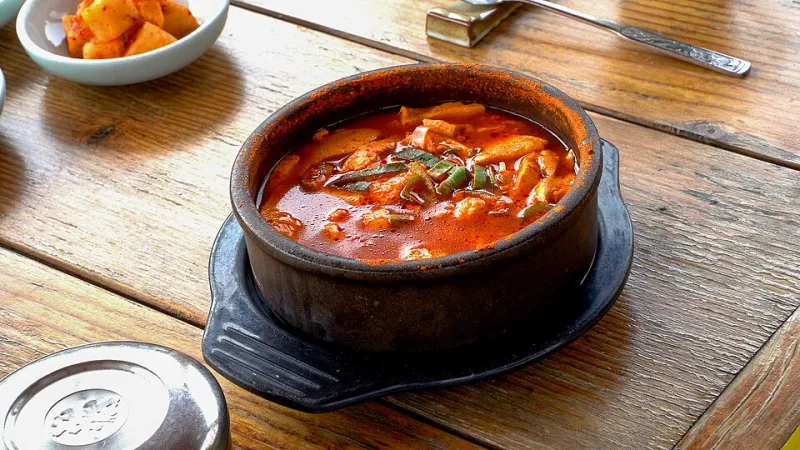
Photo: U.S. Department of State, Public domain, via Wikimedia Commons
Let's set the scene. It's 11:30 PM on a Wednesday. You're in bed, phone tilted at that specific angle your chiropractor would describe as "a lawsuit waiting to happen." On your screen, someone is unboxing their fourteenth Amazon package of the day while narrating each item in a voice typically reserved for announcing lottery winners. Before that, you watched a TikTok of a person eating a 10,000-calorie meal with the focused serenity of a Buddhist monk. Before that, a 22-year-old showed you the designer bag collection she keeps in a climate-controlled closet.
You are not alone. You are, in fact, part of a multi-billion-dollar content economy built entirely around the spectacle of having more than enough.
The Mukbang Industrial Complex
Mukbang — from the Korean meokbang, combining the words for "eating" and "broadcast" — started in South Korea around 2010 as a response to a specific cultural loneliness: people eating alone wanted the ambient company of someone else eating. It was oddly sweet in its origins. A parasocial dinner party.
By the time the format migrated to American platforms, something had shifted. The intimacy remained, but the scale had metastasized. US mukbang creators quickly understood that the algorithm rewards extremity. Eating a normal meal quietly doesn't get clicks. Eating four full racks of ribs, two lobster tails, a family-size portion of mac and cheese, and washing it down with a 44-ounce soda while maintaining steady eye contact with the camera? That gets clicks.
Creators like Nikocado Avocado built followings of millions — and documented what appeared to be dramatic physical and psychological deterioration in the process — by leaning into the spectacle of excess so completely that the content became almost performance art. Whether it was genuine or elaborately constructed theater (Nikocado himself later revealed significant portions were staged) almost didn't matter. The performance of overconsumption was the product.
And the product moved units. Top mukbang creators on YouTube can earn anywhere from $10,000 to $100,000 per month through ad revenue, sponsorships, and fan donations — often from food brands and restaurant chains who recognize that a creator eating six pounds of their product on camera reaches audiences that traditional advertising cannot.
Haul Culture and the Theater of Acquisition
If mukbang is about consuming food to excess, haul videos are about consuming everything else to excess, and the format has been a content staple since the early YouTube era.
The basic structure: creator receives many packages, opens them on camera, holds each item toward the lens while narrating its merits. The appeal is hard to articulate precisely but easy to recognize. There's a tactile satisfaction to watching someone else unbox things — a secondhand dopamine hit that mimics the feeling of receiving a gift without requiring you to spend money or wait for shipping.
Fashion hauls, tech hauls, Amazon hauls, Shein hauls — the Shein haul in particular became a cultural flashpoint when creators began posting videos of themselves unboxing literally hundreds of garments ordered from the ultra-fast-fashion retailer. Videos with titles like "I Spent $500 on Shein — Was It Worth It?" routinely hit millions of views, which created a feedback loop: the platform rewards the content, the content normalizes extreme purchasing behavior, the brands benefit from the exposure, and the creator profits enough to keep doing it.
That this content exists in direct tension with growing awareness of fast fashion's environmental and labor costs is either an irony or a feature, depending on your level of cynicism.
Why Do We Watch? (An Honest Inventory)
This is the question that media researchers, cultural critics, and concerned parents keep returning to, and the honest answer is probably: several reasons at once, and none of them are entirely flattering.
Vicarious consumption is part of it. Watching someone else eat an enormous, beautiful meal or unwrap an expensive product triggers some of the same neurological reward pathways as doing it yourself, without the cost, calories, or storage problem. It's consumption-lite — the sensation without the consequences.
Aspiration and resentment coexist uncomfortably in luxury lifestyle content. The TikTok subgenre of "old money aesthetic" and "quiet luxury" hauls, the influencer apartment tours, the "what I eat in a day" videos from people who appear to exist on a diet of $18 smoothies and restaurant meals — these function simultaneously as fantasy and as a very specific kind of irritant. You watch because you want it. You watch because you're annoyed that they have it. You watch because the algorithm noticed you watched it last time.
Anxiety relief is underrated as a factor. There's something genuinely soothing about watching someone else navigate abundance with apparent ease. The mukbang creator isn't stressed about what to eat. The haul creator isn't paralyzed by choice. They're just consuming, confidently, on your behalf, and for a few minutes that's enough.
The Platform's Cut
None of this happens by accident. YouTube, TikTok, and Instagram are not passive hosts of this content — they are active architects of the incentive structures that produce it.
Algorithms favor engagement, and extreme content drives engagement. A video of someone eating a reasonable dinner generates modest interest. A video of someone eating enough for eight people generates comments, shares, arguments in the replies, and return viewership. The platform profits from every second of watch time regardless of what the content does to the creator's body, the viewer's relationship with food, or the broader culture's understanding of what constitutes a normal amount of anything.
Brands have fully integrated into this ecosystem. Influencer marketing spend in the US exceeded $7 billion in 2024, with significant portions flowing to creators whose entire value proposition is performing excess convincingly. A luxury brand doesn't just want a creator to mention their product — they want a creator whose audience has already been trained, through hundreds of hours of haul content, to associate watching someone acquire things with positive feelings.
The performance of "too much" is, in this sense, a remarkably efficient advertising delivery mechanism.
Excess as Aspiration, Excess as Protest
There's a more generous reading of all this, and it's worth giving it space.
For many creators and viewers — particularly those from working-class backgrounds — the performance of abundance is not decadence. It's a kind of defiant visibility. The mukbang creator who grew up food-insecure and now eats lavishly on camera is doing something emotionally complex. The first-generation college student doing designer hauls is performing an arrival. The "treat yourself" culture that undergirds so much of this content carries genuine psychological weight for people who were raised to believe that wanting nice things was shameful.
And yet. The platforms harvest all of it equally — the aspirational and the compensatory, the joyful and the compulsive — and convert it into ad impressions without distinction.
The Overflow Economy
What we've built, collectively and without entirely meaning to, is an economy of performed excess that benefits platforms most, creators variably, and viewers in ways that are real but probably not net-positive. We watch people eat too much because it's soothing and stimulating simultaneously. We watch people acquire too much because it scratches an itch we can't quite name. We generate billions of dollars in ad revenue for companies that did nothing except build the room where all of this happens.
Somewhere, an algorithm is learning exactly how much is too much — and then serving you five percent more of it tomorrow.
The feed, as always, overfloweth.