Swipe Right on Despair: How Dating Apps Turned Romance Into a Performance Review You'll Never Pass
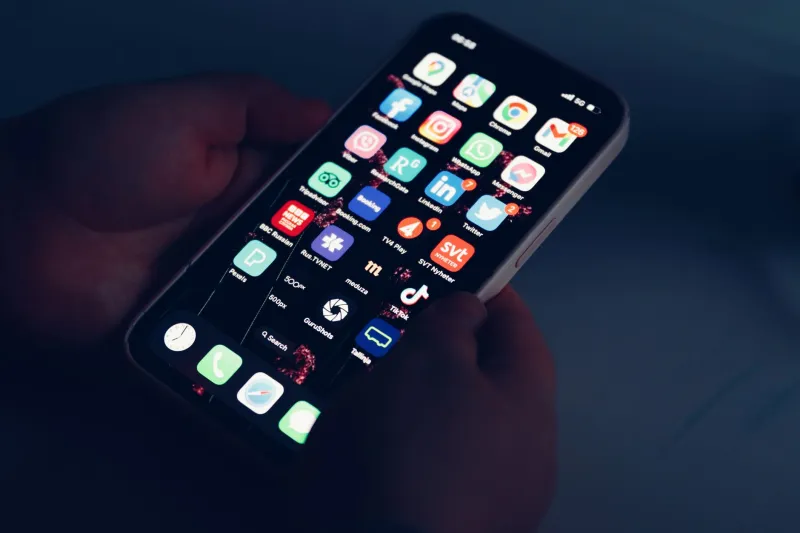
Somewhere in a gleaming San Francisco office, a product manager is looking at a dashboard that knows more about your love life than your therapist does. They know how many times you opened the app at 11:47 p.m. on a Tuesday. They know your swipe ratio. They know that your bio has been rewritten fourteen times in the last eight months, each revision slightly more self-deprecating than the last, as if the key to human connection is finding the exact right combination of words to prove you are both interesting and low-maintenance. They are not rooting for you to find love. They are rooting for you to stay on the app long enough to consider the Platinum tier.
This is the modern dating experience: a gamified, metrics-saturated, perpetually optimizable loop that has somehow convinced millions of Americans that romance is a problem to be solved through better data.
The App That Needs You Single
Let's be honest about the fundamental structural tension at the heart of every major dating platform. Hinge, Tinder, Bumble, and their extended family of swipe-based enterprises are, at their core, businesses. Businesses need revenue. Revenue comes from subscribers. Subscribers are people who have not yet found what they're looking for. Do the math.
This doesn't mean these companies are twirling their mustaches and actively sabotaging your dates — though Match Group has faced lawsuits suggesting their algorithms deliberately showed users less-compatible matches to keep engagement high, which is the kind of thing you'd dismiss as a conspiracy theory if it weren't, you know, alleged in federal court. It just means that the incentive structure is not aligned with your Wednesday-night dinner plans. The app that successfully pairs every user with their person immediately has no users. It is, at a structural level, a machine that benefits from your loneliness.
And yet here we are, thirty million of us, swiping.
You Are a Profile, Not a Person
The first thing a dating app does is ask you to compress yourself into a product listing. Six photos. A bio of 150 characters or fewer. A set of prompts designed to reveal your personality through your opinions on pineapple on pizza. You are then released into a marketplace where strangers make a binary judgment about your entire human worth in approximately 1.4 seconds — which is the documented average time a user spends evaluating a profile before swiping.
This is not how human attraction has ever worked, historically. People used to meet in contexts — at work, through friends, at a bar where someone made a terrible joke and you laughed anyway. Context provides information that no algorithm can replicate: how someone carries themselves in a room, whether they're kind to service workers, the way they listen. Dating apps strip all of that away and replace it with a photograph and a reference to The Office.
What you're left with is not a dating experience. It's a catalog. You are both the shopper and the merchandise, except the merchandise also has anxiety about its engagement rate.
The Optimization Trap
Here is where it gets truly bleak. Because dating apps function like social media platforms — with visible metrics, engagement feedback, and algorithmic amplification — users inevitably begin to treat their dating lives like content strategies.
You A/B test your photos. You rewrite your bio based on match volume. You consult Reddit threads about whether leading with a dog picture boosts your ELO score. (Yes, ELO score. Dating apps borrowed a chess ranking system and applied it to whether strangers want to get drinks with you.) You download a separate app to help you write better opening messages. You pay for the subscription tier that lets you see who already liked you, which costs $39.99 a month and produces the same hollow feeling as checking your Instagram insights at midnight.
None of this activity is about connection. It is about optimization for a system that was not designed for human flourishing. It is the romantic equivalent of spending six months perfecting your resume for a company that is not hiring.
The cruel irony is that the more time you spend optimizing, the more you internalize the idea that you are a product that needs improving — rather than a person who deserves to be known.
The Engagement Loop That Eats Your Evenings
Dating apps are engineered with the same behavioral psychology that powers every other attention economy product. Variable reward schedules. Notification timing calibrated to pull you back when your engagement dips. The little dopamine hit of a new match, followed by the slow deflation of a conversation that goes nowhere, followed by the compulsive return to the feed to try again.
This is not a bug. It is the product. The match is not the reward — the anticipation of the match is the reward, and that anticipation is infinitely renewable as long as you keep swiping. Bumble's own research has shown that users spend an average of ninety minutes a day on the app. That is ninety minutes of your finite human life spent in a state of low-grade romantic anxiety, being shown an endless scroll of people you will mostly never meet.
And when you do meet someone? The app has trained you so thoroughly in the aesthetics of optimization that you show up to a first date already evaluating whether this person would photograph well, whether their energy matches their profile, whether you should keep them or swipe on.
The Premium Tier of Human Connection
The crowning achievement of the dating app industrial complex is convincing users that the reason they're struggling is that they haven't paid enough yet. Free tier too chaotic? Upgrade. Want to be seen by more people? Boost. Want to undo that panicked left swipe? That's a feature you can purchase.
Tinder Gold costs up to $30 a month. Hinge's preferred tier runs $35. Bumble Boost, $25. For a couple who met on apps and both maintained subscriptions for a year before finding each other, the price of love — at retail — can exceed $700. Which is a lot, for a service that occasionally introduces you to someone who lists their personality as "fluent in sarcasm."
The messaging is consistent and insidious: you are not meeting the right people because you are not using the premium version of yourself. Buy the upgrade. Optimize the profile. Take better photos. Write funnier prompts. The problem is always you, and the solution is always available for purchase.
What We Actually Lost
The thing about meeting people organically — through the slow accumulation of shared space and time — is that it was inefficient in all the right ways. You couldn't filter for height. You couldn't sort by political alignment. You had to tolerate ambiguity and uncertainty and the terrifying vulnerability of not knowing how someone felt about you until you'd spent enough time with them to find out.
Dating apps replaced that inefficiency with the illusion of control. You can now filter, sort, and optimize your romantic prospects with the precision of a supply chain manager. What you cannot do is manufacture the feeling of being genuinely known by another person, which is the thing you were looking for in the first place.
The loneliness machine is very good at keeping you busy. It is less good at making you feel less alone. But it does have a Platinum tier, if you're interested. Only $49.99 a month. Your soulmate is probably just one more upgrade away.