Buzz, Ping, Ding: The Unhinged Symphony of an App Economy That Needs Your Eyes More Than Your Friends Do
Photo: Manaku, CC0, via Wikimedia Commons
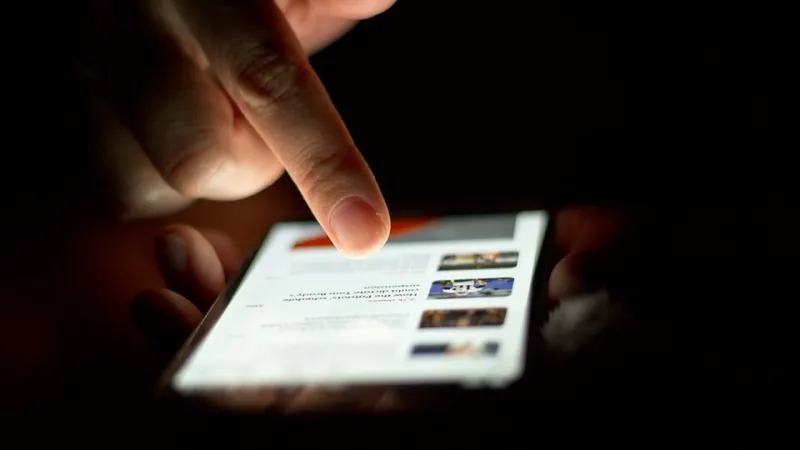
Let's play a quick game. Pull out your phone. Don't scroll — just look at the lock screen. Count the little red badges. Count the banners. Count the number of apps that have, in the last 24 hours, decided that right now was the moment to tell you something absolutely critical, like the fact that someone you follow on a recipe app just posted a new quiche.
Now ask yourself: when was the last time an actual human being in your physical vicinity needed your attention that urgently?
Right. Exactly.
We are living inside a notification apocalypse of our own gleeful construction, and the most disturbing part isn't the volume. It's that we've normalized it so completely that opting out feels like the radical act.
The Engineering of Urgency (Or: How to Make a Quiche Alert Feel Like a 911 Call)
Here's the dirty secret that Silicon Valley spent years perfecting: urgency is manufactured. Every little ping is a deliberate design choice, not a neutral transmission of information. The red badge on your email app? That specific shade of red was chosen because red triggers a threat-detection response in the human brain. The push notification that tells you "You have 3 new matches waiting" at 11 p.m. on a Tuesday? Timed for when your willpower is lowest and your loneliness is peaking.
This is not speculation. It's product design. Former insiders from companies like Facebook, Google, and Snapchat have spent the better part of a decade confessing to this on podcasts and in congressional hearings with the exhausted guilt of people who helped build the bomb and are now very concerned about nuclear proliferation.
Trstan Harris, the former Google design ethicist who became the tech industry's most prominent conscience-haver, popularized the idea of the "race to the bottom of the brain stem" — the competition among apps to hijack the most primitive, reactive parts of your psychology. The goal was never to inform you. The goal was to make you feel, however briefly, that something needed your attention right now or you'd miss out forever.
Spoiler: you would not have missed out forever. The quiche will still be there.
Your Attention Is the Product, and the Product Is Overflowing
The attention economy runs on a simple, brutal premise: every app on your phone is competing not just with other apps, but with sleep, conversation, meals, and the basic human experience of existing in a room without staring at a glowing rectangle. And the way you win that competition is volume.
More notifications. More personalization. More algorithmically timed interruptions calibrated to your specific psychological vulnerabilities, which the app has been quietly cataloguing since you agreed to its terms of service without reading them in 2019.
The result is a phone that now generates, on average, somewhere between 65 and 80 notifications per day for the typical American user, according to research from app analytics firms. That's an interruption roughly every 12 minutes during waking hours. To put that in human terms: your phone is interrupting you more frequently than a toddler with a full bladder on a road trip.
And unlike the toddler, it never stops.
The FOMO Industrial Complex
Fear of missing out is not a personality flaw. It's a survival instinct that apps have learned to weaponize with extraordinary precision. Humans are social creatures wired to monitor group dynamics, track status signals, and notice exclusion. For most of human history, this kept us alive. Now it keeps us refreshing Instagram at 2 a.m.
The notification architecture is specifically designed to exploit this. "Someone reacted to your comment" is not information. It is a social status ping dressed up as information. "Your friend just checked in at a bar near you" is not a public service announcement. It is a carefully engineered FOMO grenade lobbed directly into your prefrontal cortex.
Dr. Larry Rosen, a psychology professor and author of iDisorder, has spent years documenting how smartphone interruptions trigger anxiety loops — we check the phone to relieve anxiety about missing something, the checking creates a new anxiety cycle, and the app benefits from every single revolution of that wheel. It's not a bug. It's a subscription model for your nervous system.
We Know This. We Still Can't Stop.
Here is the part that should make us all feel some kind of way: awareness changes almost nothing. Studies consistently show that people who are fully informed about notification manipulation still don't turn them off. We know the quiche alert is meaningless. We know the "only 2 left in stock!" banner is a lie. We know the red badge is exploiting our brain chemistry.
We check anyway.
This is partly because the cost of opting out feels disproportionately high in the moment. What if someone actually needs me? What if I miss something important? What if the group chat moves on without me? The apps have made the psychological cost of silence feel greater than the cost of constant interruption, which is a staggering feat of behavioral engineering when you think about it.
Digital wellness experts like Catherine Price, author of How to Break Up With Your Phone, suggest that the first step isn't wholesale notification abstinence — it's auditing. Go through every app. Ask whether it has ever sent you a notification that genuinely improved your life. Be honest. The answer, for roughly 90 percent of them, is no.
The Notification You Actually Want
Here's what's genuinely wild about all of this: the one notification most of us would actually welcome — a real, unprompted message from a friend just saying hey, thinking of you — has become rarer precisely because we've outsourced our social attention to apps that monetize it.
We're too busy processing the synthetic urgency of fifty different platforms to generate the authentic connection that would make us feel less compelled to check them.
The apps didn't just steal our attention. They convinced us to fill the resulting void with more apps.
That's not a notification problem. That's a civilization problem with a very good marketing department.
So go ahead and silence your phone for one hour today. Not forever — just one hour. See what happens. See what you actually miss.
I'll wait. I'll be right here. I won't send you a push notification about it.