Congratulations, Your Nervous Breakdown Is Now an Engagement Metric
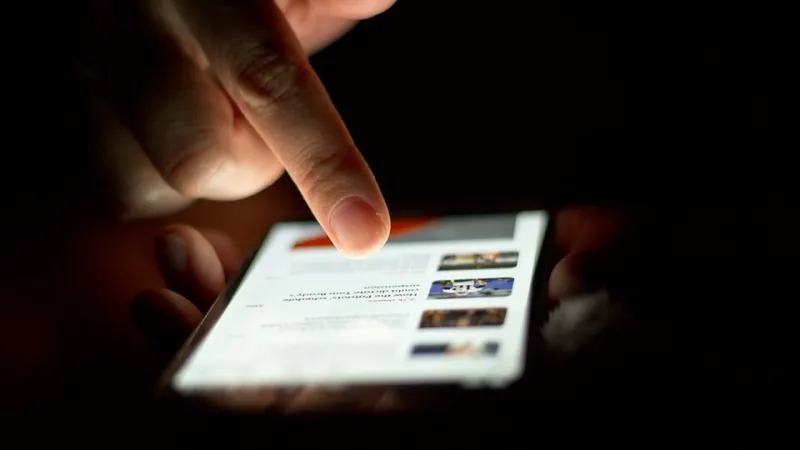
Photo: Japanexperterna.se, CC BY-SA 2.0, via Wikimedia Commons
At 11:47 PM on a Tuesday, you told yourself you were just going to check the news quickly before bed. It is now 1:15 AM. You have not learned anything actionable. You have, however, consumed seventeen takes on one story, four videos of things that made you furious, two threads that made you furious about the first four videos, and a sponsored post for a weighted blanket that the algorithm, with some accuracy, has determined you need.
This is not a personal failing. This is the product working as intended.
The Infinite Scroll Was Never Neutral
Let's dispense with the myth that the social media feed is a passive delivery mechanism for content you happen to find interesting. The infinite scroll — that seamless, frictionless, bottomless pit of content that replaced the natural stopping point of a page break — was a deliberate design choice with a measurable psychological effect.
Aza Raskin, the designer who invented the infinite scroll, has since publicly stated he wishes he hadn't. He estimates the feature costs humanity roughly 200,000 hours of collective human attention every day. This is the kind of statistic that you read, feel briefly horrified by, and then scroll past.
The scroll was just the beginning. What came after was the real innovation: teaching the algorithm that distress is stickier than delight. Outrage keeps you on the platform longer than joy. Anxiety generates more comments than contentment. Fear is, in the cold language of engagement metrics, highly performant content.
So the algorithm learned. And then it got very, very good at its job.
Anxiety as a Growth Strategy
Here is the business model, stated plainly: your attention is the product. Advertisers buy it. Platforms harvest it. The more time you spend on the platform, the more ads you see, the more money flows. Engagement — time spent, content interacted with, shares, reactions, replies — is the currency.
And nothing, it turns out, generates engagement quite like making people feel like the world is on fire.
This is not a conspiracy theory. It's a documented outcome of optimization systems that were told to maximize engagement and given no other instructions. When Facebook's own internal researchers reportedly found that their algorithms were actively amplifying divisive and emotionally destabilizing content because it generated more reactions, the finding was, at various points, minimized, shelved, or reframed as a complexity problem. The complexity, of course, was that fixing it would hurt the numbers.
The result is a media environment that has been algorithmically tuned, over years, to surface the most upsetting possible version of reality. Not because anyone necessarily wanted this — though some definitely profited from it — but because upset people click, and clicking is the point.
The Scroll as Compulsion Loop
Doomscrolling — the term emerged in 2020 but the behavior predates the word by several years — operates on the same neurological circuitry as a slot machine. Variable reward schedules. Intermittent reinforcement. The occasional dopamine hit of a post that makes you feel seen, or a story that resolves with something good, surrounded by an endless stream of content designed to keep you uncertain enough to keep pulling the lever.
The difference between a slot machine and your phone at midnight is that the slot machine has the basic decency to be located in a casino in Nevada, away from your bedroom.
Platforms have studied this. They have teams of engineers and behavioral psychologists whose jobs are, functionally, to make sure you don't put the phone down. The notification that arrives at exactly the moment you were about to close the app. The autoplay that removes the decision to continue watching. The "people are talking about this" prompt that implies you're missing something urgent if you step away.
These are not features designed for your wellbeing. They are retention mechanisms dressed in the language of connection.
We're All Competing to Consume the Worst
What makes the current moment particularly strange is the way doomscrolling has developed a social dimension. It's no longer just passive consumption of distressing content — it's become a form of competitive awareness performance.
Being the first person in your group chat to share the terrible news is a status move. Demonstrating that you have seen and processed more awful things than the next person signals engagement with the world. "Did you see what happened?" is both a question and a flex. Staying informed has become indistinguishable from staying immersed in an unending feed of catastrophe, and opting out risks being perceived as checked out.
The platforms benefit from this social pressure enormously. They didn't create the human desire to be informed and present, but they've turbocharged it into something that looks less like civic engagement and more like compulsive consumption of distress content, with the added dimension of social performance layered on top.
Your anxiety is generating content. Other people's reactions to that content generate more content. The cycle is self-fueling, and the platform sits in the middle, monetizing every rotation.
The Attention Economy Doesn't Care How You Feel After
There's a useful question to ask about any media habit: how do you feel when you stop?
After an hour of doomscrolling, most people report feeling worse than when they started — more anxious, less capable of action, simultaneously overstimulated and somehow still hungry for more information. This is the hangover of the attention economy. You consumed a lot. You retained little. You feel vaguely terrible. And yet the next notification will still get you.
The platforms are not incentivized to care about what happens after you close the app. Their metrics stop at the moment of disengagement. What you carry with you — the elevated cortisol, the distorted sense of the world as more dangerous and more broken than it actually is, the low-grade dread that has become ambient background noise for an entire generation — doesn't register on the dashboard.
We built systems to connect people and ended up building the world's most efficient anxiety delivery infrastructure instead. The scroll is infinite. The content is endless. The business model is thriving.
And somewhere, an algorithm is learning that this particular article about doomscrolling will perform best if you read it at 11:47 PM on a Tuesday, right before you were planning to go to sleep.