Congratulations, Your Productivity System Now Has a Productivity Problem
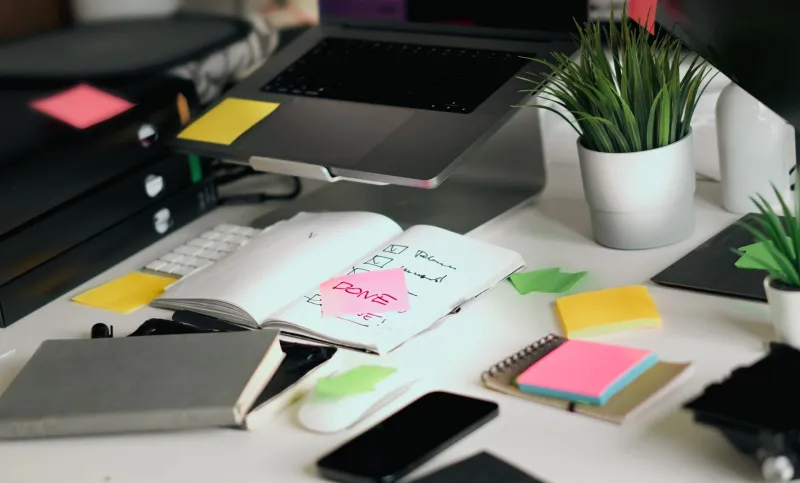
Let's do a quick audit. Not of your work — of the infrastructure you've constructed to manage your work. How many apps are currently open on your phone that exist specifically to help you do things? How many of those apps have their own notification settings you've partially configured? How many have a "getting started" checklist you completed seventy percent of before moving on to the next app? How many are syncing with each other in ways you set up once and no longer fully understand?
Take your time. This is a safe space. The answer is almost certainly more than seven.
The Promise Was Simple. The Dashboard Is Not.
The pitch for every productivity app is essentially the same, delivered with the calm confidence of someone who has definitely not personally struggled with focus: you are not disorganized, you are under-systematized. The right tool will surface the right task at the right moment, eliminate decision fatigue, and restore the deep work sessions that your scattered, notification-poisoned brain has been unable to access. Download this. Block that. Try the Pomodoro timer. Try the Eisenhower matrix. Try time-blocking. Try the two-minute rule. Try all of them simultaneously in a layered system that a productivity influencer on YouTube described as "game-changing" in a video that was itself forty-seven minutes long.
The result, for a significant portion of Americans who have gone down this road — and the market research suggests it is a very significant portion, given that the productivity software industry is worth tens of billions of dollars — is a meta-problem. The system designed to reduce cognitive load has become a source of cognitive load. You now have tasks about your tasks. You have a weekly review process for your weekly review process. You have a note in your notes app about how to organize your notes app.
This is not productivity. This is productivity cosplay.
The Stack Keeps Growing Because the Stack Is the Product
Here is what the productivity app economy has understood, with crystalline clarity, that its users have not: the goal of a productivity app is not to make you productive. The goal is to make you feel productive enough to keep subscribing while remaining just dissatisfied enough to try the next one.
This is not a conspiracy. It's a business model, and it works because it maps perfectly onto the psychology of self-improvement. Every new app represents a fresh start, a clean slate, a version of yourself who has finally figured it out. The act of setting up a new system — creating projects, color-coding priorities, writing that first beautifully formatted task — produces a genuine dopamine response. You feel organized. You feel on top of it. You feel, briefly and powerfully, like a person who has their life together.
And then the actual work is still there, waiting, unmoved by your organizational infrastructure.
So you add another layer. Maybe what you need is a calendar app that integrates with the task manager. Maybe you need the AI assistant that auto-prioritizes your inbox. Maybe the problem is that your note-taking app and your project management app aren't talking to each other, and what you actually need is an automation platform to build the bridge — which will require approximately three hours to configure and will break silently six weeks later when one of the apps updates its API.
The Subscription Tier You're Not On Is Where the Real Features Are
Every productivity app has a free tier and a paid tier, and the free tier is carefully designed to be just functional enough to get you hooked and just limited enough to make you feel like you're leaving something on the table. The paid tier costs between eight and twenty dollars a month, which sounds trivial — it's less than a lunch — until you account for the fact that you have six of these subscriptions running simultaneously, at least two of which you have forgotten about entirely.
The premium features are always described in terms that imply the free version was a form of productivity poverty. Unlimited projects. Advanced filtering. AI-powered suggestions. The ability to see your tasks in a timeline view, which you will use exactly once before returning to the list view you've always used. These features are not useless. They are, however, marginal improvements being marketed as transformations, which is the core rhetorical move of the entire industry.
You are not unproductive because you lack features. You are unproductive because the task is hard and you'd rather configure a new tagging system than do it.
The Irony of Analog Productivity Content
Somewhere in the middle of Peak App Culture, a counter-movement emerged that is itself a product category: the return to paper. The Hobonichi Techo. The Bullet Journal. The premium notebook that costs forty dollars and comes with a video tutorial. These objects are marketed explicitly as escapes from digital overwhelm, which is a beautiful thing to sell on Instagram, a digital platform, via influencers who also have a link in bio to their Notion template pack.
The Bullet Journal, in particular, has evolved so far from its original simplicity that dedicated subreddits now debate the correct methodology with an intensity previously reserved for constitutional law. There are spreads, trackers, habit logs, future logs, and migration systems. There is, in other words, a system — just an analog one, decorated with washi tape. The complexity has been preserved. Only the battery life has improved.
What Actually Works, Briefly Mentioned Because This Is Not That Kind of Article
There is a genuinely uncomfortable truth sitting at the center of the productivity app economy, and it is this: the research on what actually improves human output is not complicated, not proprietary, and not available for $12.99 a month. It involves sleeping enough, working in shorter focused blocks than most people attempt, writing down three things you need to do today (three, not thirty), and doing the hardest one first before you check anything.
This advice has been available for decades. It does not require an app. It does not sync across devices. It cannot be gamified or color-coded or reviewed by an AI that suggests you might be overcommitted this Thursday.
It is, critically, not something anyone can sell you a subscription to.
Which is why you have forty-seven apps and a recurring calendar block called "system review" that you've been rescheduling since February.
The new version just dropped, by the way. They've completely redesigned the inbox. This time it's going to be different.