Rest in Content: The Restaurant Closing as Cinematic Universe
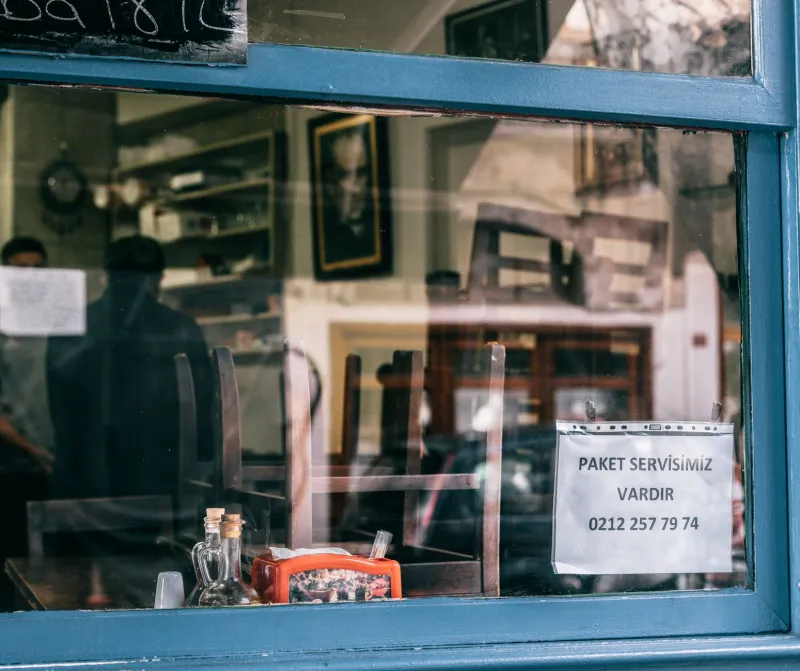
The sign used to be handwritten. Taped to the inside of the glass, maybe slightly crooked, thanking regulars for their support over the years. A phone number to call if you had questions, though nobody ever called. You'd walk past, feel a small pang, maybe mention it to someone at work. That was the whole arc. Beginning, middle, end. Grief processed in under thirty seconds.
Now a restaurant closing is a content event with a production schedule.
The Origin Story Comes First
Before the closing, there is the founding myth — which, if you haven't noticed, has become as mandatory as a health inspection. Every restaurant that opens today does so with a narrative infrastructure already in place. Grandma's recipe. A trip to Oaxaca that changed everything. Two best friends who quit their corporate jobs on the same Tuesday. The chef who survived something. The space that used to be a laundromat, a church, a tire shop — always something poetic, never just a vacant retail unit with decent foot traffic.
This backstory isn't incidental. It's load-bearing. Because when the restaurant eventually closes — and statistically, many of them will — the myth needs to be there to give the ending weight. You cannot have a tragic farewell without a heroic beginning. The TikTok algorithm requires three acts.
The founding story is essentially the pilot episode. The closing is the series finale. Everything in between is content.
The Farewell Tour Industrial Complex
A restaurant announces it's closing. Within forty-eight hours, the following things happen:
The Instagram post goes up. It is written in the first person, present tense, and uses the word "journey" at least twice. There are photos of the dining room, soft-lit and slightly melancholy, the kind of images that only get taken when something is ending. The comments fill with people who ate there once, three years ago, and are devastated. People who never went but always meant to express a grief that is, upon examination, largely about themselves.
The reservation system crashes. Every table for the remaining weeks books out within hours, filled with customers who had not visited in eighteen months but are now absolutely certain this restaurant is irreplaceable. Regulars who came every week for years find themselves on a waitlist behind people who discovered the place via the closing announcement.
The GoFundMe appears. Sometimes it's framed as helping staff. Sometimes it's a pivot fund, a relaunch fund, a "keep the dream alive" fund. The goal is always slightly more than you'd expect and slightly less than it would actually take to solve the underlying problem. It funds quickly. It is shared widely. It makes everyone feel like they participated in something meaningful without requiring them to have eaten there when it might have actually helped.
TikTok Found Its Pathos and It Tastes Like Closure
The documentary-style restaurant farewell video is now a genre with its own conventions. You know it when you see it. Shaky handheld footage of a prep kitchen at 6 a.m. A chef, visibly tired, explaining something about the cost of ingredients while chopping something with a knife that catches the light just so. A montage of handwritten notes from customers pinned to a corkboard. The final service, shot from multiple angles, with a score that sounds like it belongs in a film about a lighthouse keeper.
These videos perform extraordinarily well. They get shared by food writers, by local news accounts, by people who have never set foot in the city where the restaurant exists. They generate the kind of engaged, emotional response that a restaurant's regular content — look at this beautiful plate, come celebrate with us — never quite managed. The algorithm, it turns out, loves grief. It loves the specific texture of something good being lost, particularly when that something good has good lighting and a compelling narrator.
The cruel irony is not subtle: the content produced around a restaurant's death reaches more people than any content produced during its life. The closing post outperforms every opening post, every seasonal menu reveal, every carefully styled flat-lay of a charcuterie board. Failure, framed correctly, is the most viral thing a small business can do.
What We're Actually Mourning
It would be easy — and not entirely wrong — to be cynical about all of this. To point out that the people flooding the comments with broken-heart emojis are, in aggregate, the same people who chose DoorDash on a Tuesday instead of actually going. That the farewell reservation surge is a form of grief tourism. That the GoFundMe redistributes guilt more effectively than it redistributes capital.
But there's something else happening underneath the content layer, something worth taking seriously. People are genuinely mourning. Not always the specific restaurant — sometimes they barely knew it — but what it represented. A third place that wasn't a screen. A room where the lighting was warm and someone cooked something for you and you sat across from another person and that was the whole point of the evening. These places are closing at a rate that reflects something real and structural about rent, labor costs, post-pandemic foot traffic patterns, and a food delivery economy that extracts margin from the businesses it claims to support.
The tragedy is real. The mythology just makes it easier to share.
The Relaunch Is Already in Pre-Production
Here is the final act that the content format has quietly normalized: the comeback. The pop-up. The ghost kitchen resurrection. The chef who closed the dining room but kept the sauce and is now selling it at the farmers market with a QR code linking to a Substack about what they learned.
The closing, it turns out, is not always an ending. Sometimes it's a rebrand. A narrative reset. A way to shed the overhead of a physical location while retaining the mythology that the location generated. The restaurant becomes a story about a restaurant, which is arguably more durable and definitely cheaper to operate.
Grandma's recipe survives. The journey continues. The TikTok channel is still posting.
Please follow for updates.