Two Hundred Notifications and None of Them Are From Someone Who Loves You
Let's start with a number. The average American receives somewhere between 65 and 80 push notifications per day. That figure comes from various app analytics firms, and it is almost certainly an undercount because it doesn't fully capture the people who have given notification permissions to apps they downloaded once for a flash sale and then completely forgot existed.
Sixty-five to eighty. Per day. That's a notification roughly every twelve minutes during waking hours. That's more interruptions than a kindergarten classroom. That's more urgency than most actual emergencies produce. And the overwhelming majority of those notifications are, to use a technical term, completely made up.
The Artificial Urgency Factory
Here's a thing that app developers learned early and have never forgotten: the human brain is wired to respond to signals that something has changed in the environment. It's a survival instinct. A sound, a flash, a vibration — your nervous system is designed to notice these things and treat them as potentially important. This is great when you're avoiding predators. It is somewhat less great when the predator is a meal kit delivery service informing you that your box has left the facility.
Every notification is, at its core, a lie. Not a big lie. A small, ambient lie that says: something has happened that requires your attention right now. The grocery app says your rewards points are about to expire. The fitness app says you haven't moved in an hour. The news app says there's a developing story — a phrase that has come to mean "something is happening somewhere and we have no additional details but we do have your phone number." The retail app says the sale ends at midnight, except the sale always ends at midnight and there is always another sale.
None of this is urgent. None of it is real urgency. It is manufactured urgency, assembled in a product meeting by people whose job is to increase daily active users by getting you to open the app one more time. The notification is not trying to help you. The notification is trying to feed the app's engagement metrics, which is a very different thing.
The Permission You Gave Without Reading
Somewhere along the way — probably around 2015, probably while you were trying to skip past a setup screen — you gave a lot of apps permission to interrupt you at any time for any reason. You didn't read the notification settings. Nobody reads the notification settings. The notification settings are designed to be skipped, because if you actually sat down and considered whether you wanted Domino's to be able to buzz your wrist every Tuesday with a "pizza deal of the day," you might say no.
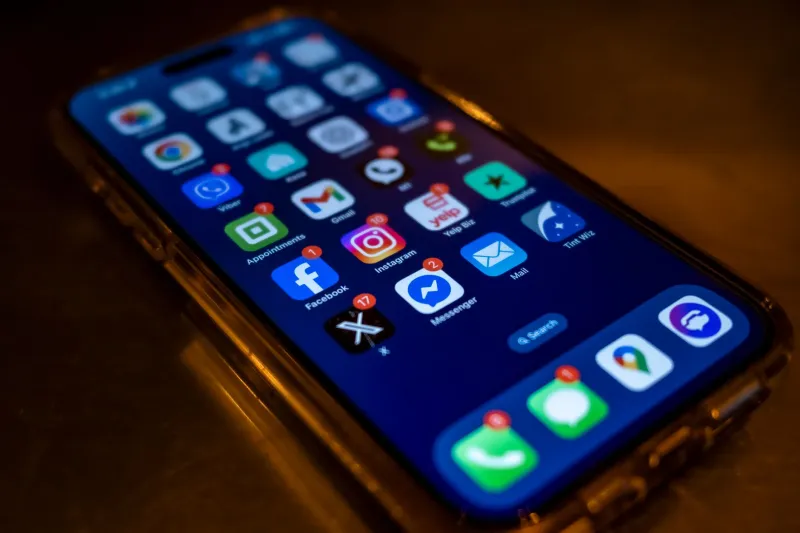
So now your notification center looks like a hostage negotiation that has gone badly wrong. There are seventeen apps in there that you haven't opened since the Obama administration. There's a game you downloaded during a flight delay that is informing you your crops are ready to harvest. There's a bank app, two airline apps, a meditation app (which is sending you a notification to remind you to be present, which is the kind of irony that would be funny if it weren't also making you insane), and something called "Fetch" that you genuinely cannot identify.
All of them are talking. None of them are saying anything.
The Silence That No Longer Exists
The thing that the notification economy has quietly stolen — more quietly than you'd expect, given how loud it is — is silence. Not the silence of an empty room, necessarily, but cognitive silence. The sense that your brain is not currently expected to respond to something.
There used to be gaps. You'd sit in a waiting room and just... wait. You'd stand in line and look around. You'd lie in bed for a few minutes in the morning and exist in the gentle fog between sleep and waking. These were not wasted moments. They were the moments when your brain filed things away, made small connections, recovered from the previous day's input.
Those moments are gone. They have been colonized by the notification economy, which identified them correctly as unused attention and moved quickly to fill them. The waiting room now has your phone in it. The line has your phone in it. The bed has your phone in it, and the phone is vibrating because someone liked a photo you posted four days ago, and your brain — your poor, exhausted, stimulus-saturated brain — processes this as something that happened.
Researchers have found that it takes an average of 23 minutes to fully regain focus after an interruption. Twenty-three minutes. If you're receiving a notification every twelve minutes, you are, mathematically, never fully focused on anything. You are living in a permanent state of interrupted recovery, a cognitive purgatory from which you briefly emerge only to be pulled back under.
The Anxiety Is the Feature
The cruelest part of this entire system is that missing a notification now feels like a failure. Not because anything bad happens — nothing bad ever happens when you miss the Chipotle Tuesday deal — but because the sheer volume of pings has trained you to experience silence as absence. If your phone isn't buzzing, are you sure it's on? Are you sure you haven't missed something? Are you sure you're still connected to the world?
This is not an accident. An app that you check compulsively out of fear of missing something is infinitely more valuable than an app you check when you actually want to. The anxiety is the retention strategy. The FOMO is the product.
And so you check. You clear the notification center. You feel, briefly, like you've accomplished something. And then the phone buzzes again, because your package has moved to a new facility, and the whole cycle starts over.
A Modest Proposal From a Person Who Is Very Tired
Turn off some notifications. Not all of them — you need the ones from people who actually want to reach you. But the apps? The retail apps, the reward points apps, the "we miss you" apps, the apps that send you notifications to tell you they've sent you an email?
They can wait.
They were never urgent. They were never important. They were a toddler banging a spoon on a high chair, and you are not obligated to respond just because the noise is loud.
Your attention is the most finite resource you have. Every app that gets a piece of it is taking that piece from something — or someone — else.
Your crops, for the record, will be fine.