Every Bread Is a Personality Test Now and You're Failing
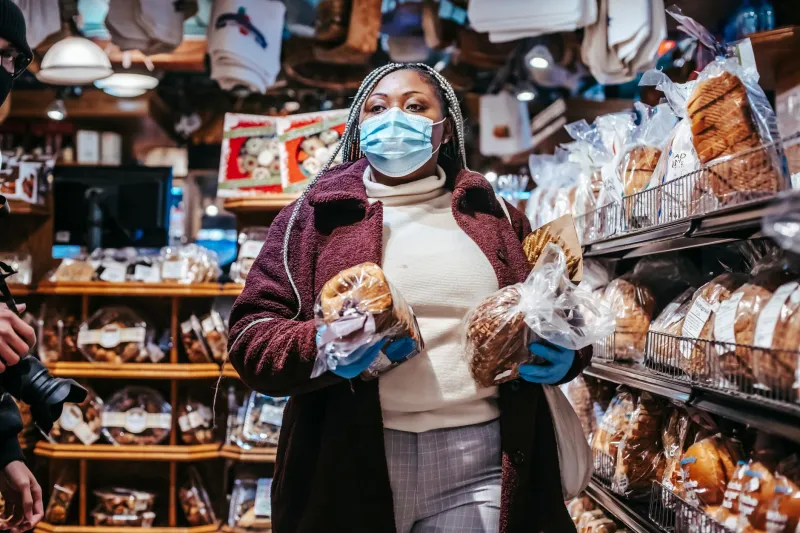
You walked in for bread. You will leave forty-five minutes later with a $14 loaf of something made from tiger nut flour and existential uncertainty, a half-eaten sample of almond-based cheese you didn't enjoy, and a deep, specific sadness that no amount of probiotic soda can fix.
This is the modern American grocery store. It is no longer a store. It is a choose-your-own-adventure novel written by twelve different wellness influencers who all disagree with each other, formatted as a retail space, and staffed by one extremely tired person in the deli section who just wants to go home.
The Aisle That Ate Itself
There used to be a bread aisle. It had bread in it. You picked bread. You left. The whole operation took maybe ninety seconds, including the moment you briefly considered whether to get the wheat or the white and then just grabbed whatever was closest.
That aisle is gone. In its place is a sprawling, multi-subsection archipelago of grain-adjacent products, each one promising to resolve a different anxiety. Gluten-free. Grain-free. Keto. Paleo. Low-FODMAP. Ancient grain. Sprouted. Sourdough — but not regular sourdough, artisan sourdough, which is different, somehow, in ways that require a QR code to explain.
The loaves are no longer just loaves. They are manifestos. Each package tells you what it doesn't contain before it tells you what it does, which is either a brilliant marketing strategy or a confession that the product's actual ingredients are not its strongest selling point.
You stand in front of all of it, holding your basket, and you think: I just want toast. And the store looks back at you and says: But who are you, though?
The Fractured Consumer and the Wellness Identity Maze
Here's what happened. Somewhere in the last decade, dietary choices stopped being about digestion and started being about identity. Gluten-free went from a medical necessity for people with celiac disease to a $9.7 billion market fueled primarily by people who read one article in 2013 and felt bloated after Thanksgiving. Nobody's blaming anyone. We were all there. We all had a phase.
But the food industry, which has the subtlety of a golden retriever who has spotted a tennis ball, noticed this immediately and responded the only way it knows how: by making more of everything. More categories. More claims. More certifications. More stickers on the packaging that say things like gut-friendly and mindful protein and, genuinely, designed with your microbiome in mind, as though your intestinal bacteria sat on a product development committee.
The result is a supermarket that has fractured along identity lines so fine that the bread section now has more distinct demographics than a mid-size American city. You don't just buy bread. You buy the bread that confirms you are the kind of person who has done the research, made the sacrifice, and understood something that your bread-eating friends haven't figured out yet.
The Paradox of the Infinite Loaf
Here's the cruel irony that the grocery store will never acknowledge because it would be bad for business: more options have made it meaningfully harder to make a decision. Psychologists call this the paradox of choice. Grocery stores call it "the natural foods section" and charge you a 40% premium for the privilege of experiencing it.
When there were five bread options, you picked one. When there are fifty-two, you spend eleven minutes reading labels, pull up your phone to google whether xanthan gum is bad now, abandon the phone because the signal is terrible near the refrigerated kombucha wall, make a decision based entirely on which package has the most reassuring font, and then second-guess it in the parking lot.
The abundance hasn't made you healthier. It's made you more anxious about whether you're being healthy correctly. And a person who is anxious about their choices is a person who will come back next week and buy something different, which is, if you think about it, the whole business model.
A Brief Tour of the Specialized Zones You Did Not Ask For
While you're here, let's acknowledge the full scope of what the modern supermarket has become. There's the "free-from" section, which sounds like a liberation movement but is mostly crackers. There's the functional food aisle, where products have been engineered to do something — reduce stress, improve focus, support immunity — in addition to being food, because apparently just being food is no longer a sufficient value proposition.
There's the entire refrigerated wall of plant-based alternatives, which has now expanded to include plant-based versions of things that were already plants. There's the supplement-adjacent snack zone, where the line between food and medication has become so blurry that some products have disclaimers. There's the "better for you" section, which implies that everything else in the store is worse for you, which is a deeply uncomfortable thing to admit in a store that also sells everything else.
And then, somewhere, there is still a regular loaf of sandwich bread. It costs $3.49. It has been there the whole time. You will not buy it, because at this point you've been in the store long enough that buying the regular bread feels like giving up.
The Trip You Came In For
You will leave with the tiger nut loaf. You will eat two slices, find the texture confusing, and leave the rest on the counter until it develops a philosophical relationship with mold. You will not feel well or unwell. You will feel exactly as you felt before, except $14 poorer and somehow more tired.
Next week, you'll go back. There will be a new section. Something involving adaptogens and ancient Peruvian grains. The signage will be tasteful and the font will be very reassuring.
You'll stand in front of it for eleven minutes.
You'll buy the bread.